By Jae · K-Culture Log
There's a specific kind of happiness in eating standing up on a cold Seoul street, paper cup of broth in one hand, something hot and a little messy in the other. That's street food here. It's cheap, it's fast, and it's where a lot of Korea's best flavors actually live.
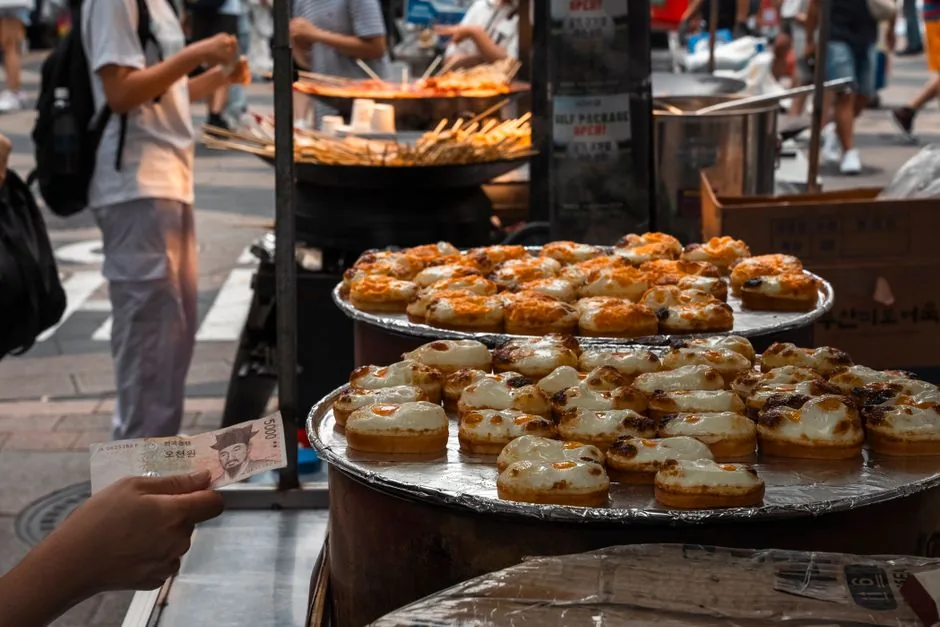
Most of it clusters around markets and the orange tents called pojangmacha. You don't need a plan — just walk, point, and eat. Here are twelve things worth ordering, from the safe to the slightly adventurous.
The ones everyone starts with
Tteokbokki — chewy rice cakes in a sweet-and-spicy red sauce, the unofficial king of Korean street food. If the heat worries you, look for rose tteokbokki, a newer twist that blends cream into the sauce, turning it pink and much milder. It's everywhere in 2026.
Korean corn dog — not your county-fair corn dog. These come crusted in everything from potato cubes to ramen crumbs, often half-mozzarella so you get a cheese pull. One of the most TikTok-famous Korean snacks for a reason.
Hotteok — a chewy pancake filled with molten brown sugar, cinnamon, and nuts. Winter perfection. Watch for the savory japchae hotteok (stuffed with glass noodles and veg), which has been quietly stealing fans lately.
Gimbap — seaweed rice rolls, portable and cheap. The mini versions (mayak gimbap) come with a mustard-soy dip and disappear fast.
Easy to love, a little less famous
Eomuk / odeng — fish cake on a skewer, sitting in a warm broth you're usually free to sip for free. The ultimate cold-weather comfort.
Dakkochi — grilled chicken skewers, often glazed sweet-and-spicy. Hard to walk past.
Twigim — Korean tempura: battered and fried veggies, shrimp, or squid. Locals dunk it in tteokbokki sauce. Do that.
Mandu — dumplings, steamed or fried, filled with pork, kimchi, or vegetables.
The sweet corner
Bungeoppang — a fish-shaped pastry filled with sweet red bean (or, increasingly, custard). Crispy edges, warm middle.
Gyeranppang — "egg bread," a small sweet-savory loaf baked with a whole egg on top. Breakfast on the move.
Hoddeok-style nuts and hodu-gwaja — little walnut-shaped cakes with red bean and walnut inside, sold by the bag.
Gun-goguma — roasted sweet potato, sold from steel-drum roasters in winter. Just sugar and warmth, no seasoning needed.
A few street rules
Bring cash and small bills — many tented stalls don't take cards. Portions are small on purpose, so the move is to graze across several stalls rather than fill up at one. And if a stall has a long line of locals, get in it; that line is the review.
You won't remember every name on your first trip, and that's fine. Point at what looks good, hand over a few thousand won, and eat it while it's hot. That's the whole tradition.
What it costs, and how to do it right
Street food is gloriously cheap. Most snacks land somewhere around 2,000 to 5,000 won — a couple of dollars — so the smart play is to graze across several stalls instead of filling up at one. Carry small bills, too; vendors rarely break big notes and even more rarely take cards.
A lot of it is seasonal. Hotteok, roasted chestnuts, and steel-drum sweet potatoes show up when it turns cold, because eating something hot on a freezing street is half the joy. Warmer months lean toward lighter bites and shaved-ice desserts. And the orange pojangmacha tents really come alive in the evening, especially near markets and busy subway exits — that's prime time.
A few more worth hunting down once you've found your feet: sundae, a savory blood-and-glass-noodle sausage that's far tastier than it sounds; kkwabaegi, a chewy twisted sugar donut; and rabokki, tteokbokki with instant ramen noodles dropped in. None of them need any Korean to order.
One last bit of etiquette: it's completely normal to eat standing right at the stall and hand the cup or skewer back when you're done. At eomuk carts you can usually sip the warm broth for free while you decide what's next. Take them up on it — that easy, standing-up, broth-in-hand moment is the whole pojangmacha spirit.
FAQ
Do I need cash for street food? Yes — bring small bills. Many pojangmacha (street tents) and market stalls are cash-only.
Is Korean street food very spicy? Some of it (tteokbokki) is, but plenty isn't — corn dogs, hotteok, gimbap, and most sweets are mild. Rose tteokbokki is a gentler option.
Where do I find the best street food? Traditional markets (like Gwangjang or Namdaemun) and the orange-tent pojangmacha. Follow the local lines.
New to Korean food overall? Start with where to begin and what to order first.
About the author — Jae is a Seoul-based writer at K-Culture Log, helping newcomers get into Korean culture without the overwhelm.
Comments
Post a Comment