Korean Food for Beginners: Where to Start (and What to Work Up To)
By Jae · K-Culture Log
Most people don't come to Korean food through a guidebook. They come through a K-drama where someone's eating something steaming at 2 a.m., or a friend who won't stop talking about the fried chicken. Then they sit down at an actual Korean table, get hit with a dozen little plates nobody ordered, and freeze.
Let me take that panic away. Korean food is friendlier than a first menu makes it look, and you don't have to be brave to enjoy it.
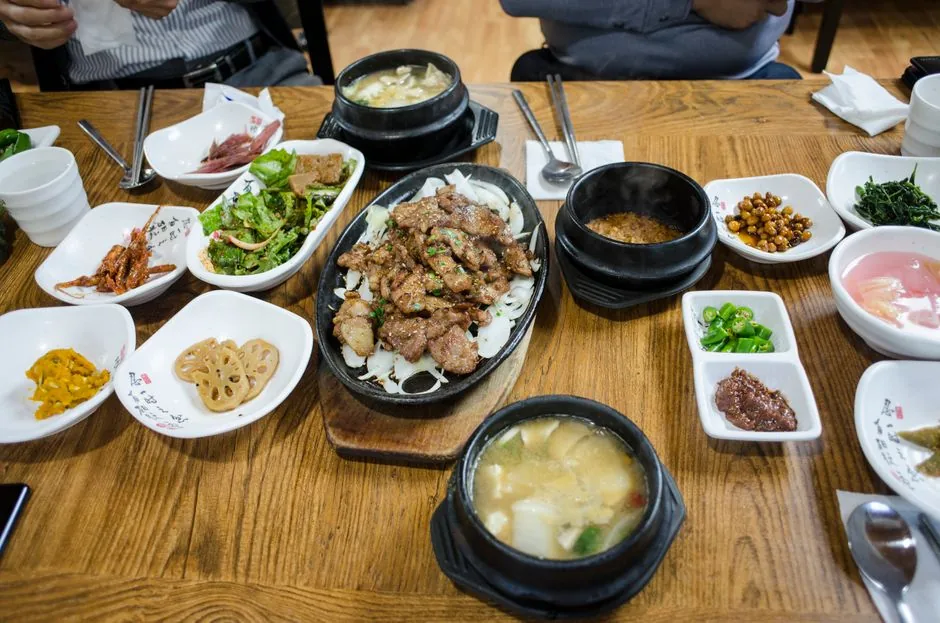
First, those little plates. They're called banchan, they're free, and they get refilled for free too. Kimchi, seasoned spinach, braised potatoes, fish cake, whatever the kitchen made that day. You're never really eating one thing in Korea, which is the whole trick: even if one dish isn't for you, there's always something on the table that is.
Start here if you're nervous
If you want a guaranteed good time on your first try, order bulgogi. It's thin slices of beef marinated in soy sauce, sugar, sesame oil, and pear, and there is nothing scary about it. Sweet, savory, soft. I've never seen anyone dislike it.
From there, bibimbap is the smart next step. A bowl of warm rice topped with vegetables, a fried egg, and usually beef, with a scoop of red chili paste on the side. The key word is "on the side." You stir in as much or as little of that paste as you want, so you're the one deciding how spicy your meal gets.
Japchae is the other easy win. Glassy sweet-potato noodles stir-fried with vegetables and beef, a little sweet, completely mild, and weirdly addictive once you start. If you've ever liked any noodle dish, you'll like this one.
And then there's Korean fried chicken, which is honestly how a huge share of the world fell into Korean food in the first place. It's double-fried, so the crust stays thin and crackly even under sauce. Order it in soy-garlic if you want savory, or the sweet-and-spicy version if you're feeling braver.
The spice question
This is the thing everyone worries about, so let me be straight. Yes, some Korean food is spicy. No, most of it won't hurt you.
Korean heat tends to be a warm, building burn rather than a sharp slap, and it's almost always wrapped around something savory or sweet. A few things help: rice calms heat better than water, the free side dishes reset your mouth between bites, and you can ask for most stews "deol maewo" (덜 매워), which means "less spicy." Nobody will judge you for it.
When you're ready to test yourself, tteokbokki is the classic next rung. Chewy rice cakes in a sweet-and-spicy red sauce, sold on basically every street corner. The bouncy texture surprises first-timers more than the spice does.
Work up to these
Once you've got your footing, the stews are where Korean home cooking really lives. Kimchi-jjigae is made from aged kimchi, pork, and tofu, and it's sour, deep, and comforting in a way that's hard to explain until you've had a bad day and a hot bowl of it. Sundubu-jjigae, a bubbling pot of silky soft tofu, is gentler and just as cozy.
And give plain kimchi a few honest tries before you decide. It's tangy, a little funky, mildly spicy, and it grows on most people until they start craving it.
The part nobody warns you about: dessert
Here's what's actually booming right now. It isn't just the classics having a moment — Korean desserts are one of the fastest-growing corners of the whole food wave in 2026. Bingsu, a mountain of shaved milk-ice piled with fruit or red bean, is the one to know. Croffles (a croissant pressed like a waffle) are everywhere too, and older traditional sweets like yakgwa are quietly making a comeback. Save room. Seriously.
One easy first order
If you're standing in front of a Korean menu right now and feeling stuck, order bulgogi or Korean BBQ as your main, japchae on the side, a bowl of rice, and a small plate of kimchi to test the waters. It's mild, it's balanced, and it covers the core of how Korean food actually tastes in one sitting.
You don't have to love everything on day one. Try one new thing each visit, lean on the side dishes, and let your spice tolerance catch up on its own. Give it a month and you'll be the one dragging friends to the Korean place.
FAQ
Is all Korean food spicy? No. Plenty of the staples — bulgogi, japchae, bibimbap — are mild, and with bibimbap you control the heat yourself by how much chili paste you stir in.
What should I order on my first visit? Bulgogi or Korean BBQ as the main, japchae on the side, rice, and a little kimchi. Mild, balanced, and it covers the core of Korean flavors.
Are the side dishes (banchan) free? Yes, and they get refilled for free too.
Ready for the next step? Here's how to eat Korean BBQ without looking lost.
About the author — Jae is a Seoul-based writer at K-Culture Log, helping newcomers get into Korean culture without the overwhelm.

Comments
Post a Comment